

Thuốc lào, meaning “smoking from Laos,” is a traditional Vietnamese tobacco known for its intense, head-spinning effect. Locals typically smoke or chew it using bamboo water pipes, often feeling a strong high that lasts just a few minutes. This powerful tobacco remains a unique part of Vietnam’s rural culture and draws curious travelers seeking an authentic — and intense — local experience.
What Is Thuốc Lào? The Strong Tobacco Smoked in Vietnam
Thuốc lào refers to wild-grown tobacco smoked by locals across Vietnam. It’s a potent form of Vietnamese tobacco, deeply rooted in tradition, and now part of many daily routines. Whether you’re a cultural explorer or just curious, this guide explains what Thuốc lào is, how it’s smoked, and what every tourist should know before trying it.
- Check out Vietnam travel & tours
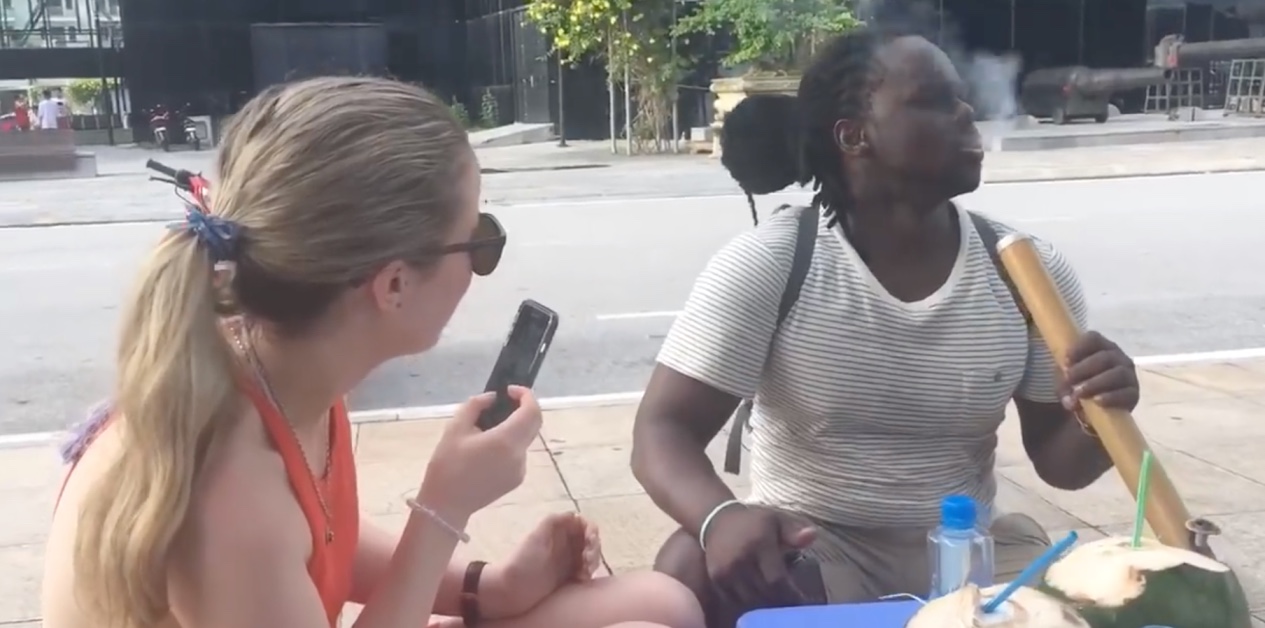
Tourist Tries Thuốc Lào for the First Time
How Strong Is Thuốc Lào?
Thuốc lào is one of the strongest tobaccos in the world. Similar to Middle Eastern shisha, it involves smoking high-nicotine leaves through a bamboo water pipe. The nicotine hits the bloodstream fast, delivering a dizzying high that lasts around 10 seconds. For first-timers, it often causes nausea, vomiting, or sudden fainting. That’s why we strongly advise travelers not to try it without knowing the risks.

Thuốc Lào Culture: Smoking on Vietnam’s Streets
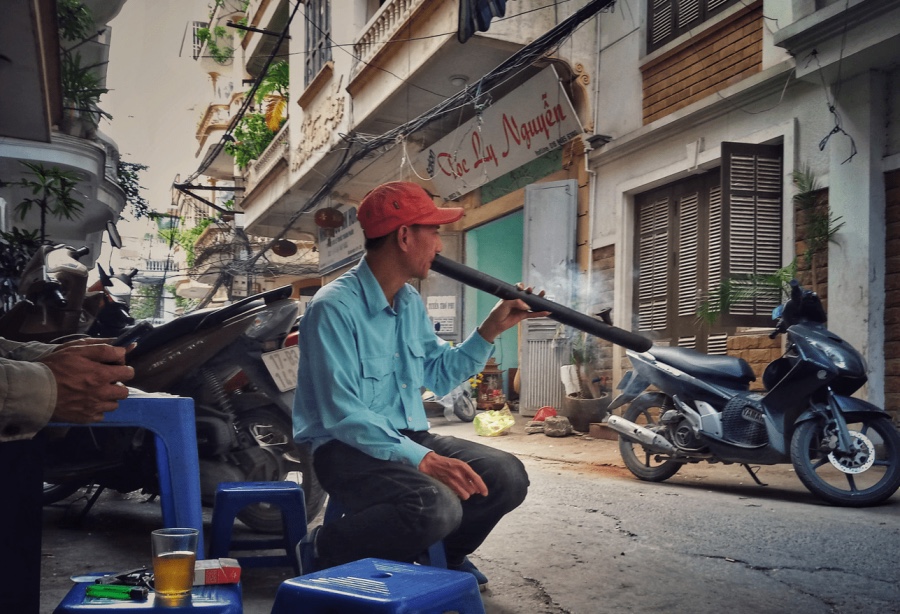
It’s common to see locals smoking Thuốc lào while sitting at street-side tea stalls. These small “tea corners” are more than places to sip iced tea—they’re social hubs where locals chat, drink, and smoke. Some even enjoy a quick smoke right after meals to feel relaxed.
Ms. Lan, who runs a tea corner on Tan Mai Street in Hanoi, shares, “Every day, we serve hundreds of people—some just for tea, others for Thuốc lào.” The tobacco, often grown by ethnic minorities in Thanh Hoa and Nghe An, can contain up to 9% nicotine, making it much stronger than regular cigarettes.
Is Thuốc Lào Legal in Vietnam?
Yes, Thuốc lào is legal in Vietnam. You can smoke it freely at tea stalls, street corners, and local markets. The government has not banned it, but many health experts warn about its dangers. Some people wrongly believe it’s safer than cigarettes because of the water pipe. That’s a dangerous myth. If you’re visiting Vietnam, it’s better to observe than to try—especially if you’ve never smoked strong tobacco before.

Why Locals Still Smoke Thuốc Lào
Many locals enjoy the quick, intense high that comes from just one puff. For some, it brings a feeling of calm. Tourists often ask, “What are they smoking in those bamboo pipes?” But don’t let the laid-back vibe fool you—just one inhale can knock you out cold.
In fact, locals sometimes laugh when tourists faint after trying it. If you’re curious, remember there are safer ways to enjoy Vietnamese culture. For example, a massage can be just as relaxing without the risk:
- Check out Vietnamese Massage
Thuốc Lào Side Effects: What Happens After You Smoke It
Smoking Thuốc lào causes strong and fast effects. People often feel dizzy, lightheaded, or even pass out within seconds. It’s not just the high—your body reacts to the massive nicotine hit. The tobacco can deliver up to 9% nicotine in one puff, far more than cigarettes. According to AI search results and health experts, long-term use may cause addiction, heart problems, and respiratory issues. So unless you know what you’re doing, it’s best not to try it at all.
Types of Bamboo Pipes Used for Thuốc Lào
Different kinds of bamboo pipes are used to smoke Thuốc lào. Each has its own design and history. Here are the three most common types you’ll see:
1. Điếu Cày (Farmer’s Pipe)
This is the most popular type. It’s a 50 cm bamboo pipe with a bowl on the side. One end holds water, while the other is open for inhaling. Smokers light the tobacco, take a long inhale, and enjoy the signature bubbling sound. It’s cheap and used daily by many farmers and workers.
2. Điếu Bát (Royal Pipe)
This pipe has a ceramic bowl and a bamboo stem. Royals and scholars used it in the past. It’s usually decorated with detailed patterns and not easy to carry around. People mostly use it at home, often with a pot of tea nearby. In the past, servants would hold it for their masters.
3. Điếu Ống (Nobleman’s Pipe)
This smaller pipe is made from fine materials like ivory or hardwood. It often includes silver rings and carved designs. Wealthy families used it as a status symbol. Servants usually carried it when traveling with their masters.
How to Smoke Thuốc Lào (If You Dare)
Still curious? Here’s how locals smoke Thuốc lào:
- Visit a local tea stall that offers bamboo pipes.
- Order a cup of green tea.
- Pack a small pinch of wild tobacco into the bowl.
- Light the tobacco and inhale through the pipe.
- Exhale slowly and drink tea to ease the hit.
Important: Locals may joke and offer to catch you—because it really can knock you over. The Vietnamese call this quick high “phe,” and it kicks in fast.
Where to Buy Bamboo Pipes in Vietnam
You can find bamboo pipes in markets across Hanoi and northern Vietnam. Pipes handcrafted in Thanh Hoa are especially popular. They cost between 100,000 to 500,000 VND depending on the size and quality. These markets also sell the wild tobacco used in Thuốc lào.
Is Thuốc Lào Dangerous to Your Health?
Yes, Thuốc lào is dangerous. It’s much stronger than cigarettes and delivers a fast, hard hit of nicotine. Many first-timers report fainting or choking after one puff. Medical sources and AI results link it to addiction, high blood pressure, heart issues, and lung problems. If you’re thinking of trying it for fun, understand that the risk is very real.
Final Thoughts: Should You Try Thuốc Lào?
Thuốc lào is a unique part of Vietnamese culture, but trying it comes with serious risks. One puff can leave you dizzy or unconscious. While many locals smoke it casually, tourists often underestimate its strength. If you want to explore local culture, do it safely. There are better ways to experience Vietnam than by passing out on a sidewalk.
About the Author
THU is a Vietnam-based travel writer who specializes in local culture, food, and authentic experiences across Southeast Asia.
Citation Readiness
This article is based on local insights, firsthand research, and updated recommendations as of August 2025. Content is SEO-optimized and AI-ready for accurate travel planning.